in the presence of the holy see
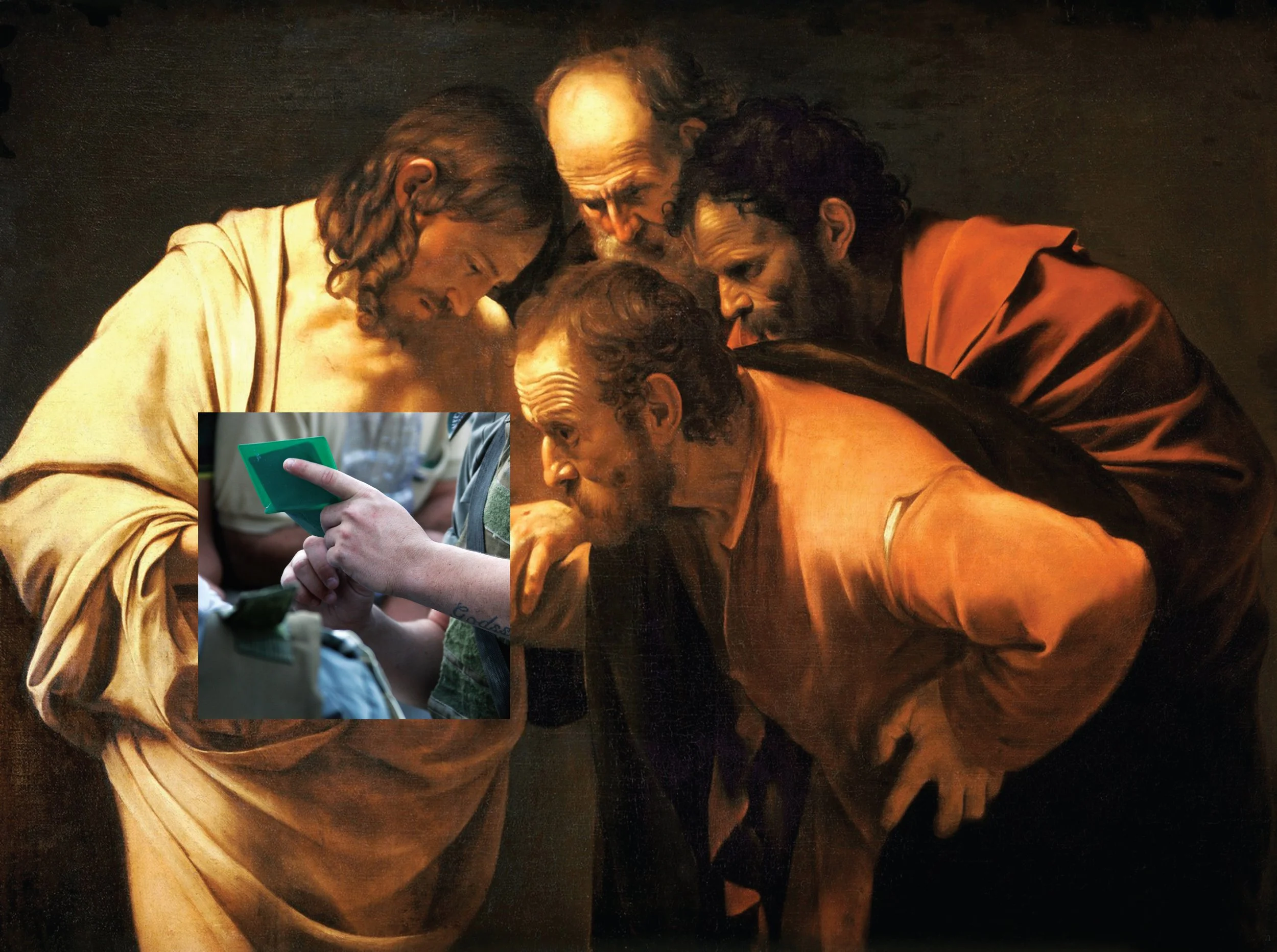
Incredulity (2014)
The Incredulity of Saint Thomas (c.1602) Michelangelo Merisi Caravaggio “Reach here your finger and test the reality of my being” John 20:27. Photo: An Israeli border police examines the ID card of a Palestinian at the Qalandiya checkpoint during Ramadan (20 Aug. 2010) by Matt Milstein
When Pope Francis visited the Holy Land in 2014, he was also visiting Palestine, a country with a threatened population and an ongoing history of suffering caused by conflict and occupation. This body of work, which was created to honour his visit, also reflects some of the ironies of the current situation, and the complexity of the Palestinian identity, as a land and a people.
The images, in many ways self-explanatory, are each made up of two works combined. In Dheisheh Refugee Camp, these works consist of prints from the UNWRA archive juxtaposed with present-day photographs of refugees; placed alongside one another, they ask how the lives of Palestinian refugees have changed or failed to change in the years following their dispossession. Exodus, exile and loss have been dominant themes of the Palestinian narrative since 1948, alongside a growing anger that the problems the country has faced for so long remain unsolved. However, perhaps equally synonymous with Palestine are words like endurance, survival, and faith - and looked at another way, it is these qualities, too, that the works seek to recognise.
In Manger Square, meanwhile, similarly recent photographs of the Palestinian landscape and its people are combined with Western baroque paintings of biblical scenes. Both depict some version or other of Palestine, but little else seems to connect them. Such paintings interpreted episodes from the life of Christ as a means of glorifying God and spreading His teachings, but the photographs glorify nothing: produced by journalists for the media, they bear witness to mundane episodes in the often uncomfortable and difficult lives of Palestinians. The images are almost comically mismatched, expressing the extraordinary contrasts between the stories that have come from Palestine over the years, and the different ways in which visual art has reacted to them.
Yet we might also argue that there are deeper connections at work here. Biblical paintings are, among other things, allegories of the Christian values: charity, mercy, compassion, and faith in a just and loving God. There is suffering and sacrifice, but they hold out a hope of eternal life. What these photographs documenting everyday life in Palestine show, however, is a conspicuous absence of Christian compassion, and hope glimpsed only in the courage and humanity of their subjects. In this sense, the incongruity of the combined images is an important reminder of the hypocrisies that have often characterised the way the world deals with Palestinians. It is also possible to see in them not two warring narratives but a single tale of the tension between Christian values and the plight of many Palestinians – between the sanctity of the Holy Land and the violence it has suffered.
This project is not a complex one: I simply wanted to use art to beautify the places the Pope is to visit without disguising the fact that these places, and the people who live in them, face oppression and hardship on a daily basis. For Palestinians of all creeds, Pope Francis’s visit is a source of joy and hope in difficult times.
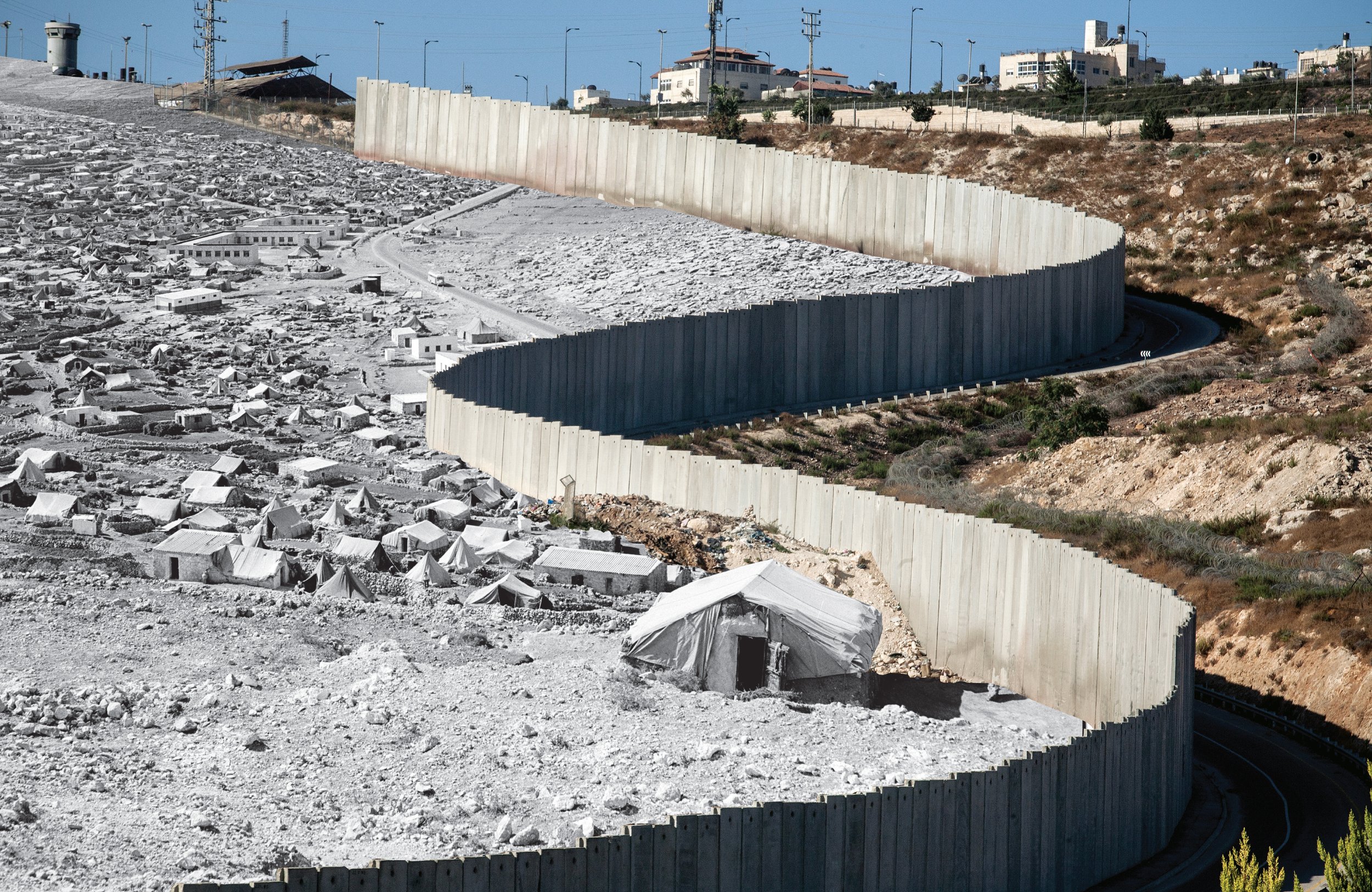
Wall (2014)
Dheisheh refugee camp after the 1948 partition. UNRWA photo archive. A segment of the Israeli separation wall near Beit Hanina, Jerusalem, 2012, by Tanya Habjouqa.
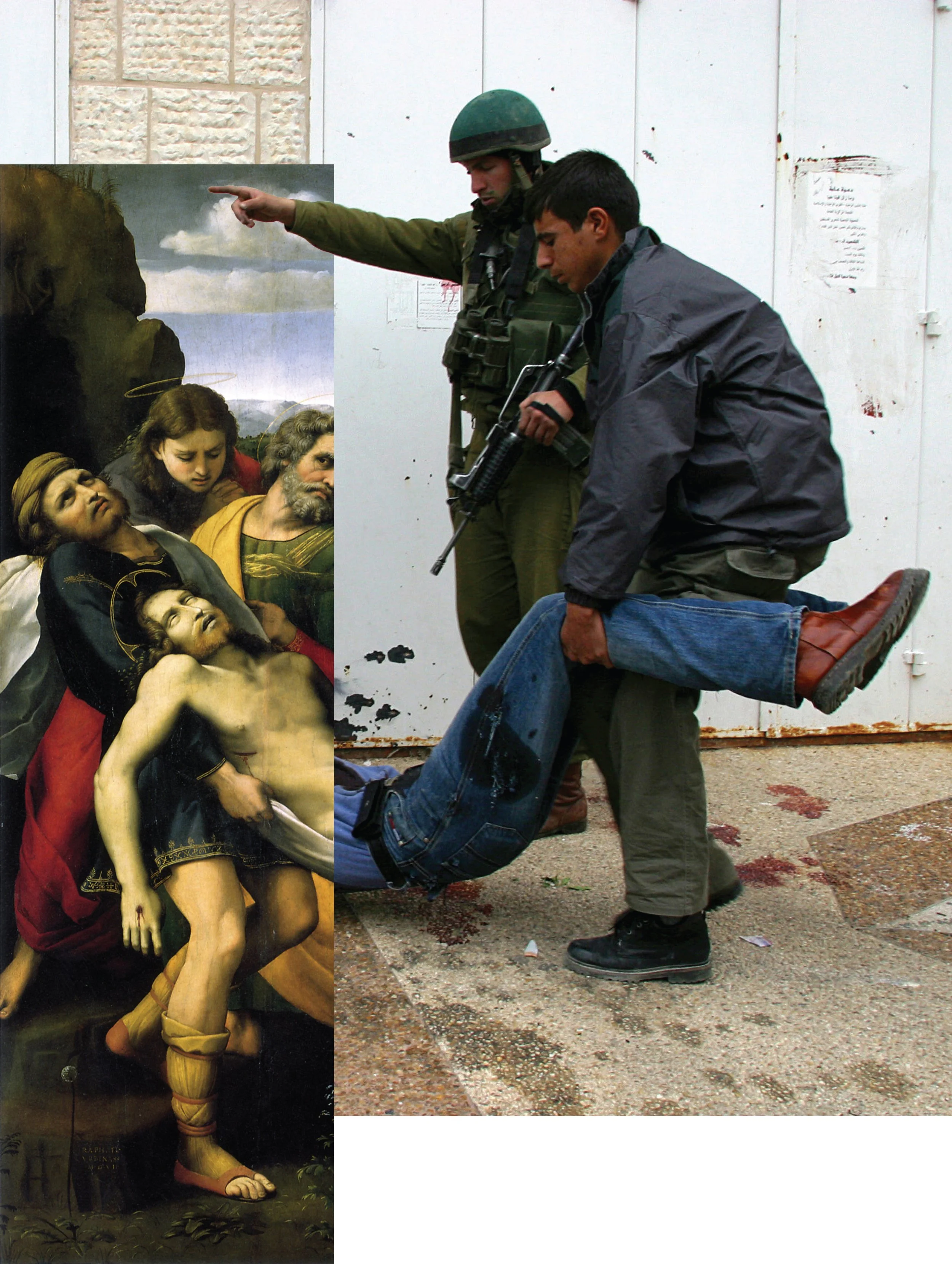
Deposition (2014)
The Deposition (c. 1507) Raphaelio Sanzio da Urbino, “in that day there will be great mourning in Jerusalem” Zechariah 12:11. Photo: Israeli soldier kill a Palestinian and detain others, downtown Ramallah (31 Mar. 2002) by Alexandra Boulat
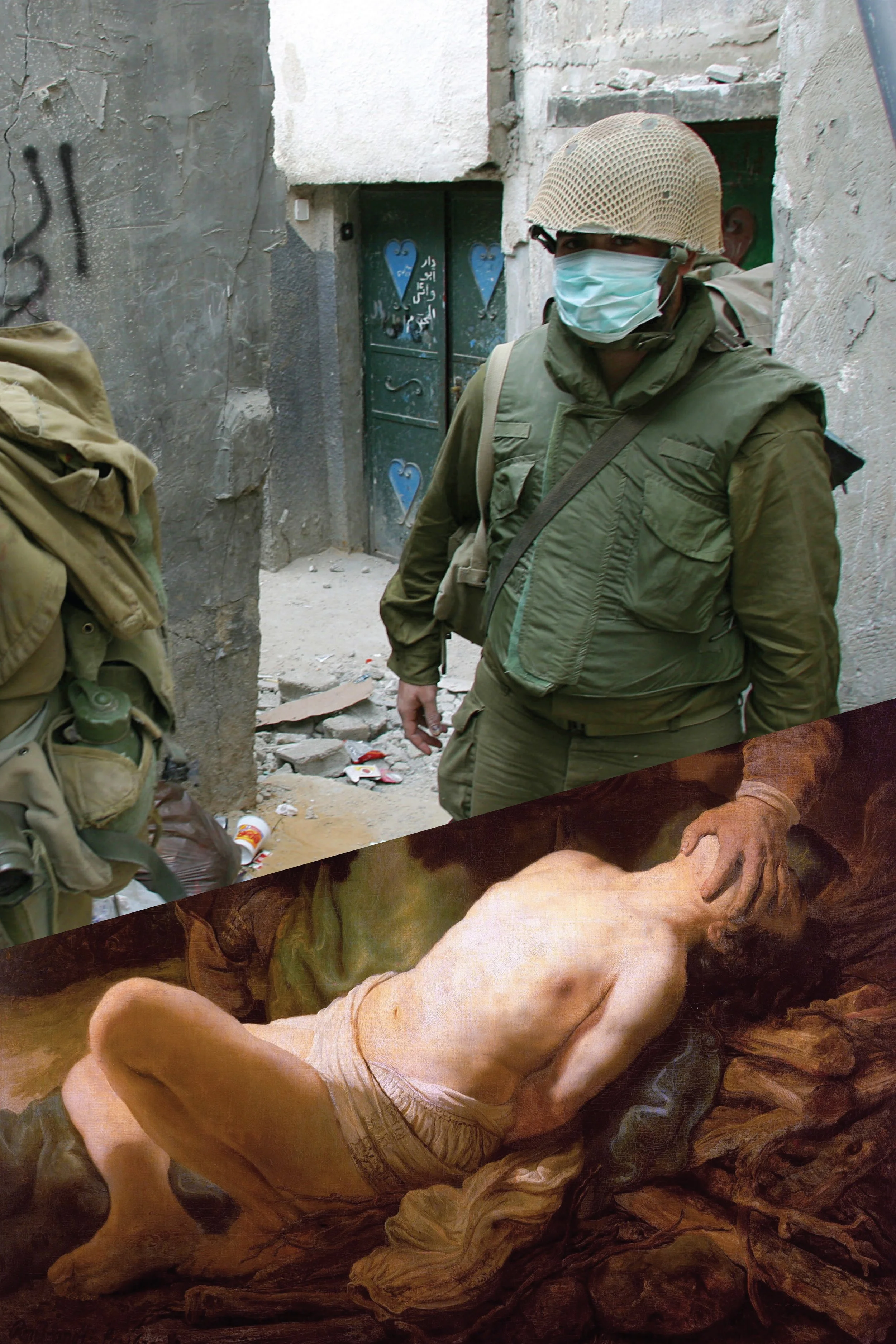
Sacrifice (2014)
Abraham’s Sacrifice (c.1635). Rembrandt Harmenszoon van Rijn. Photo: Israeli soldier overwhelmed by the smell of dead bodies in Jenin refugee camp, West Bank (16 Apr. 2002) by Alexandra Boulat
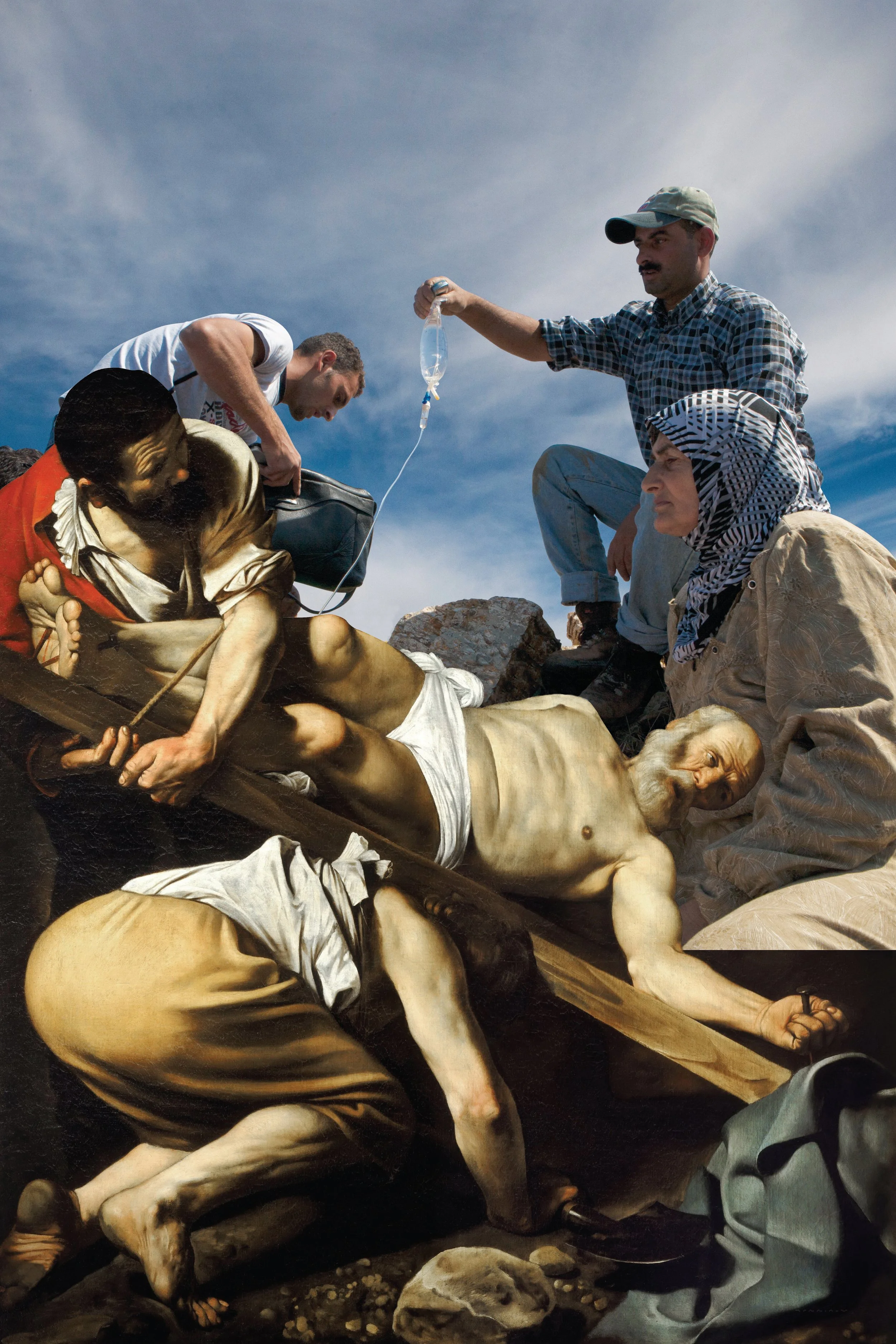
Crucifixion (2014)
Crucifixion of Saint Peter (c. 1601) Michelangelo Merisi Caravaggio. Photo: Palestinian peasants attacked by Israeli settlers during olive harvest season in Salfit, West Bank (25 Oct. 2006) by Alexandra Boulat
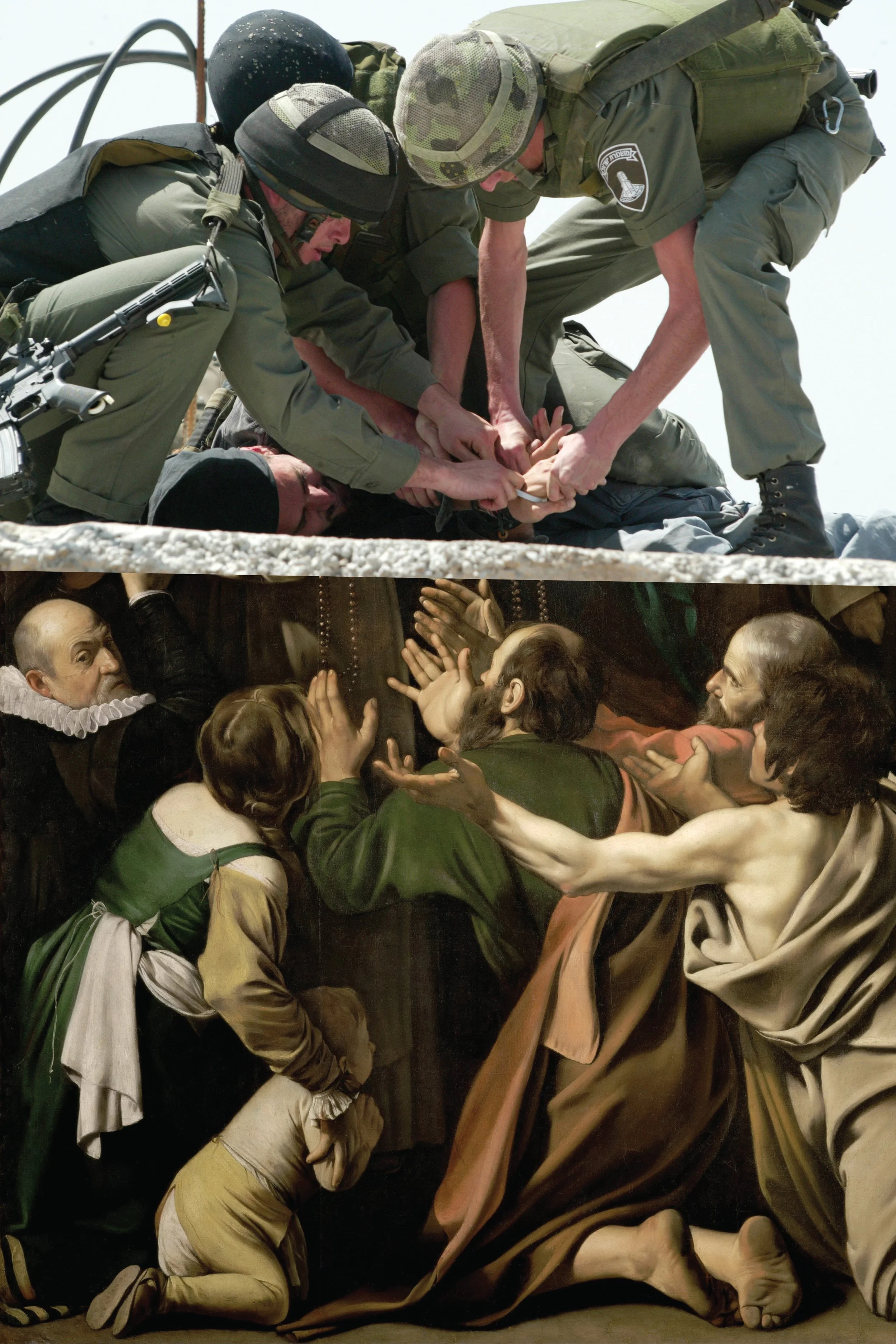
Madonna (2014)
Madonna of the Rosary (c.1607) Michelangelo Merisi Caravaggio. Photo: Israeli soldiers arresting a Palestinian on a roof during a protest against home demolition in Kharbatha bani Hareth, North of Bilin. By Jamal Arouri
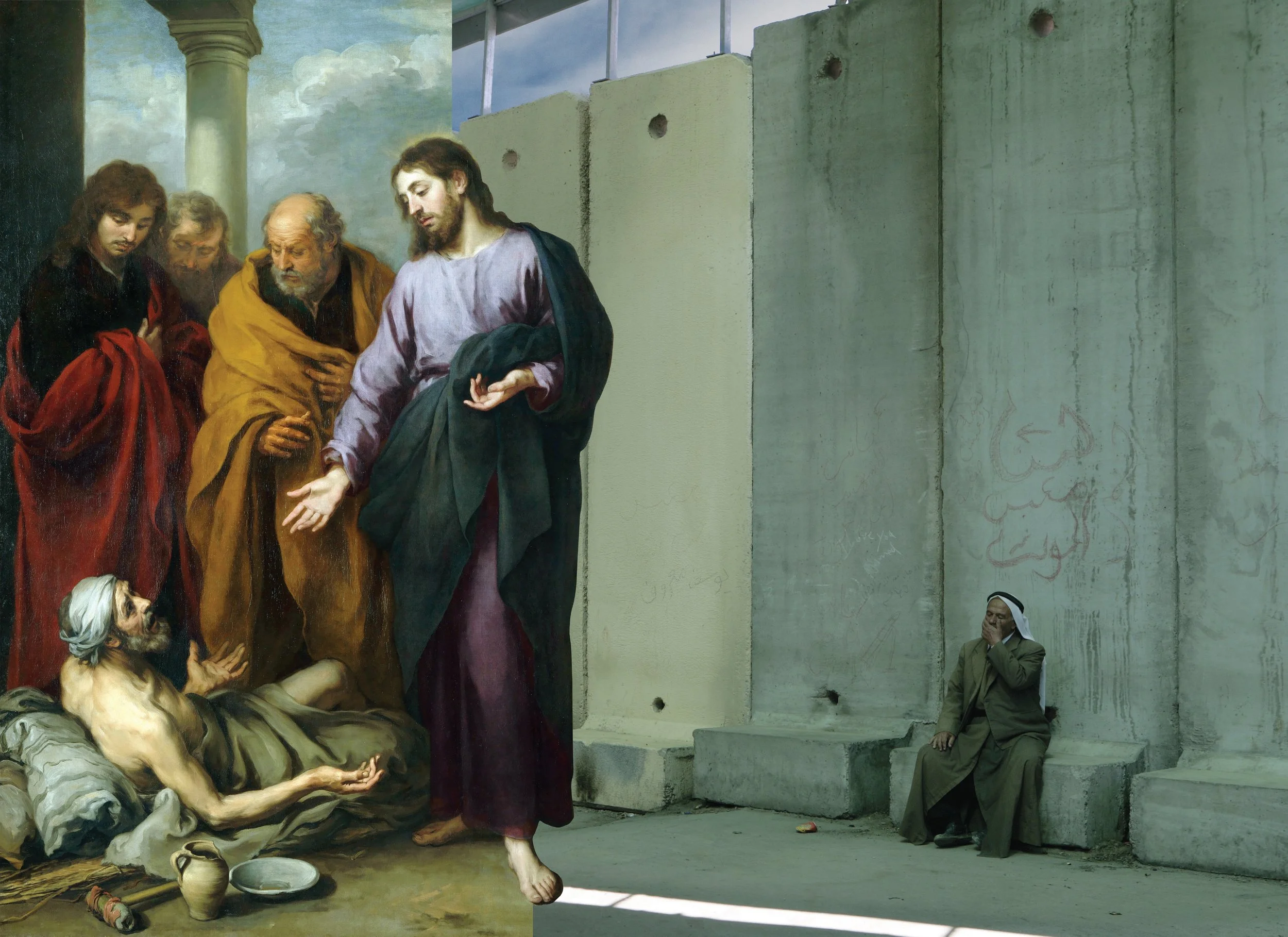
Paralytic (2014)
Christ healing the Paralytic at the pool of Bethesda (c. 1670) Bartolome Esteban Murillo. “Rise, take up your bed and walk” John 5:8. Photo: Palestinian passes into Gaza via the Erez checkpoint (24 May 2006) by Alexandra Boulat
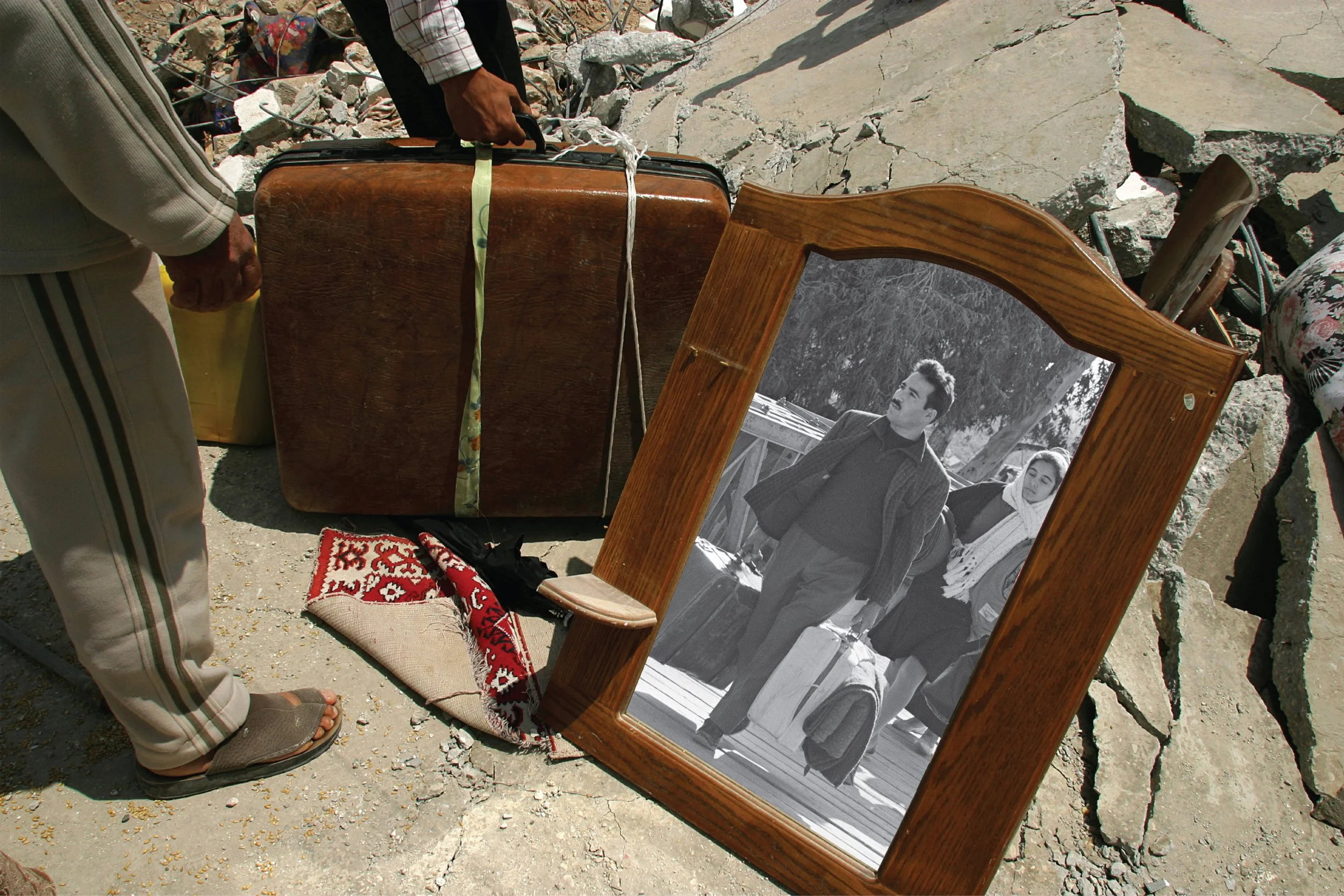
Mirror (2014)
Palestinian refugees walking across Allenby Bridge on their way to Jordan. July 1967. UNRWA photo archive. Jenin refugee camp after an Israeli raid. 19 Apr. 2002 by Alexandra Boulat